
If you are searching for the prefab house cost in India, you have probably seen per-square-foot rates that vary wildly from one listing to the next. That is because a prefab house is not a fixed product. The final price depends on what you build, where you build it and how it is finished.
This guide explains the 12 factors that decide prefab house cost in India, so you can compare quotes fairly, plan a realistic budget and avoid surprises. It is written by the ORZA Infra team, who design and deliver modular homes and prefab cottages for clients across India.
In this guide
Why Prefab House Cost in India Varies So Much
Two prefab houses of the same size can have very different prices. One may be a basic single-skin cabin for occasional use; the other may be a fully insulated family home with premium glazing, a modular kitchen and air conditioning. Both are called prefab houses, but they are not comparable.
Online rates usually quote only the structure and shell. They often leave out the foundation, plumbing, electrical work, interiors, transport, installation and taxes. When you compare prefab house cost in India, always ask what is included and what is not.
The 12 Factors That Decide Prefab House Cost
1. Built-up area
Area is the starting point. A larger home needs more structure, wall panels, roofing and finishes. However, cost does not always rise in a straight line: services such as the kitchen and bathrooms cost roughly the same whether the home is compact or generous.
2. Design complexity
Simple rectangular plans with regular spans are more economical to engineer, produce and install. Curved walls, deep cantilevers, multiple roof levels and many corners add engineering time, special components and labour.
3. Structural system
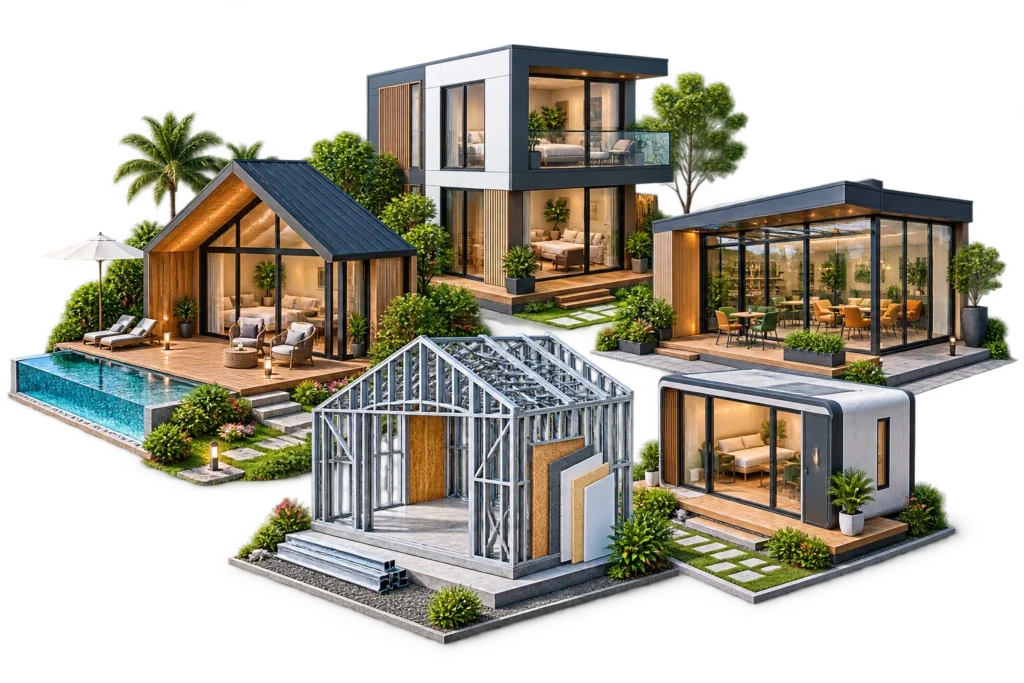
The structure might be light gauge steel framing (LGSF), a hot-rolled steel frame, volumetric modules or a hybrid. Each has a different material, fabrication and erection cost. The right choice depends on spans, number of floors, transport access and how permanent the building needs to be.
4. Walls, insulation and envelope
The envelope has a big influence on both cost and comfort. Insulation type and thickness, external cladding, internal lining boards, vapour control and weather barriers all vary in price. In hot or cold regions, spending more on the envelope usually improves day-to-day comfort and can reduce cooling or heating needs.
5. Roof build-up
A simple sloping metal roof costs less than an insulated roof with false ceilings, a parapet or a usable terrace. In heavy-rain areas, proper drainage, flashings and overhangs are essential and should be included in the budget.
6. Doors, windows and glazing
Large glazed openings make prefab homes feel open and bright, but uPVC, aluminium and high-performance glazing vary considerably in price. The number, size and quality of openings is often one of the biggest swing factors in prefab house cost.
7. Interior finishes
Flooring, wall finishes, ceilings, kitchen, wardrobes and bathroom fittings can range from basic to premium. Decide early which spaces deserve investment and where a simpler finish is acceptable.
8. MEP services
Electrical wiring, lighting, plumbing, sanitary fittings, water heating, air conditioning and data cabling are all part of a liveable home. Prefab homes still need these services, and their scope should be clearly listed in any quote.
9. Foundation and site preparation
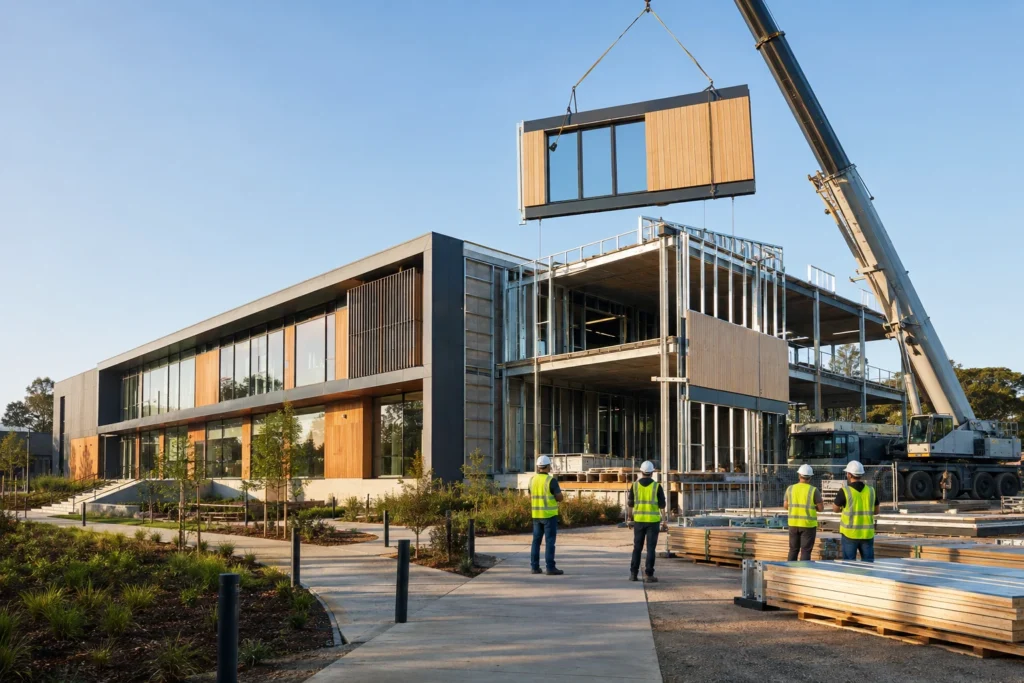
A prefab house still needs a foundation, such as a plinth, pedestal footings or screw piles, along with levelling, drainage and utility connections. Soil conditions, slopes and water tables affect this part of the budget.
10. Transport distance and site access
Components or modules must travel from the preparation location to your site. Distance, road width, hill roads, river crossings and crane access all influence transport and installation cost. Remote sites usually cost more to build on, whatever the method.
11. Number of units
Repetition helps. Building several identical cottages or homes spreads design and engineering effort across more units, and repeated production is more efficient. This is one reason clustered resort or rental projects can achieve better value per unit.
12. Approvals, taxes and timeline
Local building approvals, structural certification where required, GST and the project timeline all affect the final number. Rushed timelines may need extra resources; long delays can increase site overheads.
How to Compare Prefab House Quotes Fairly
To compare prefab house cost in India properly, ask every supplier to price the same scope. A useful checklist:
- Is the foundation included, or only the superstructure?
- Which insulation, cladding and lining materials are specified, and in what thickness?
- Are doors, windows and glazing specified by type and size?
- Are electrical, plumbing and sanitary works included?
- Which interior finishes are included, and which are allowances?
- Are transport, cranes, installation and taxes included?
- What is the warranty and after-sales support?
A quote that looks cheaper on a per-square-foot basis may simply exclude items that another quote includes.
Ways to Control Prefab House Cost Without Cutting Quality
Keep the plan simple. Regular shapes and standard spans reduce engineering and production effort.
Invest in the envelope first. Good insulation and weather protection are hard to upgrade later, while finishes can be improved over time.
Group wet areas. Placing the kitchen and bathrooms close together shortens plumbing runs.
Plan for phases. Start with the essential rooms and design the structure so you can add a bedroom, deck or second unit later.
Freeze decisions early. Changes after production begins are expensive in any construction method.
Is a Prefab House Cheaper Than Conventional Construction?
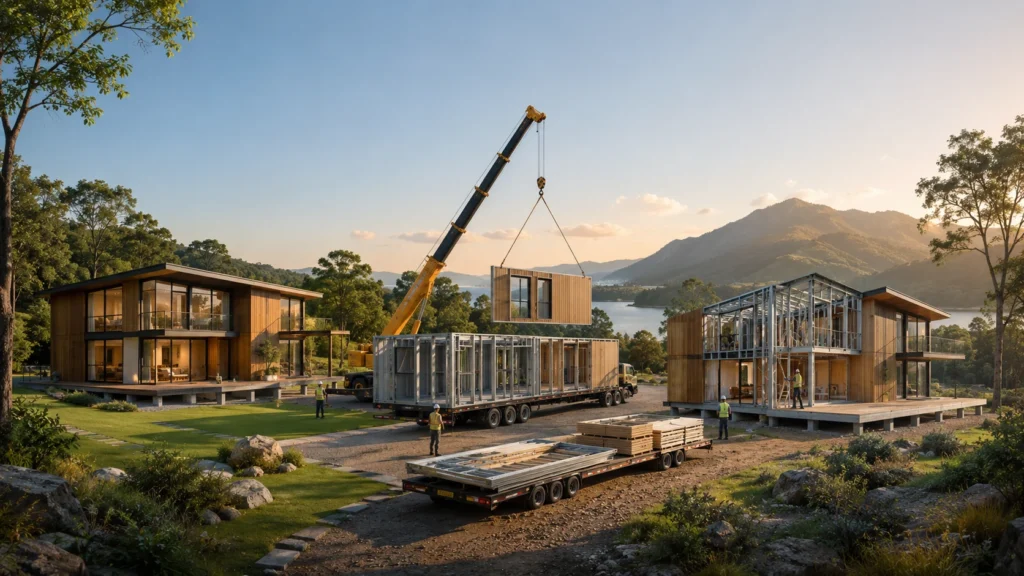
It depends on the project. A prefab house can offer better cost certainty because much of the work is planned and prepared before site work begins, and site work and component preparation can run in parallel. For remote sites, resorts and repeatable units, this can make prefab a strong option.
For a single custom home in a city with easy access to materials and labour, conventional construction may be competitive. The best way to decide is to compare complete, like-for-like scopes rather than headline rates. You can learn more about the general method in this overview of prefabricated homes.
Want a realistic budget for your prefab house? Share your location, approximate area and finish expectations with ORZA Infra. We will explain the options and prepare a project-specific estimate. Contact our team or call +91 99267 76000.
Frequently Asked Questions
What is the prefab house cost in India per square foot?
There is no single rate. Prefab house cost in India depends on the structure, insulation, glazing, interiors, services, foundation, transport and approvals. Compare complete scopes rather than headline per-square-foot rates.
Does prefab house cost include the foundation?
Often it does not. Many quotes cover only the superstructure. Always check whether the plinth or footings, site levelling and utility connections are included.
Are prefab houses cheaper than RCC houses?
Not always. Prefab can offer better cost certainty and parallel progress, especially for remote sites and repeatable units, but the comparison should be made on a like-for-like scope.
Can I reduce prefab house cost by building in phases?
Yes. A structure planned on a regular grid allows you to start with essential rooms and add bedrooms, decks or extra units later without rebuilding.
How do I get an accurate prefab house cost estimate?
Share your site location, built-up area, number of units, preferred finishes and timeline with an experienced provider such as ORZA Infra, who can prepare a project-specific estimate.