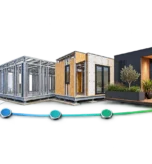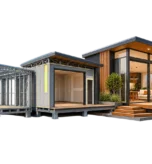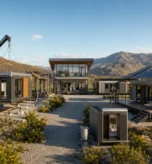

LGSF vs RCC is one of the most common questions we hear from homeowners, resort developers and institutions planning a new building in India. Reinforced cement concrete (RCC) is the familiar default. Light gauge steel framing (LGSF) is a newer, drier, more precise way to build that is gaining ground across the country.
Neither method is right for every project. This guide compares LGSF vs RCC construction across eight practical differences, so you can choose based on your site, budget, timeline and how you plan to use the building.
In this guide
What Is LGSF and What Is RCC?
RCC combines concrete with steel reinforcement bars. It is cast in place using formwork, then cured over days and weeks. Most Indian buildings, from homes to hospitals, use an RCC frame with brick or block walls.
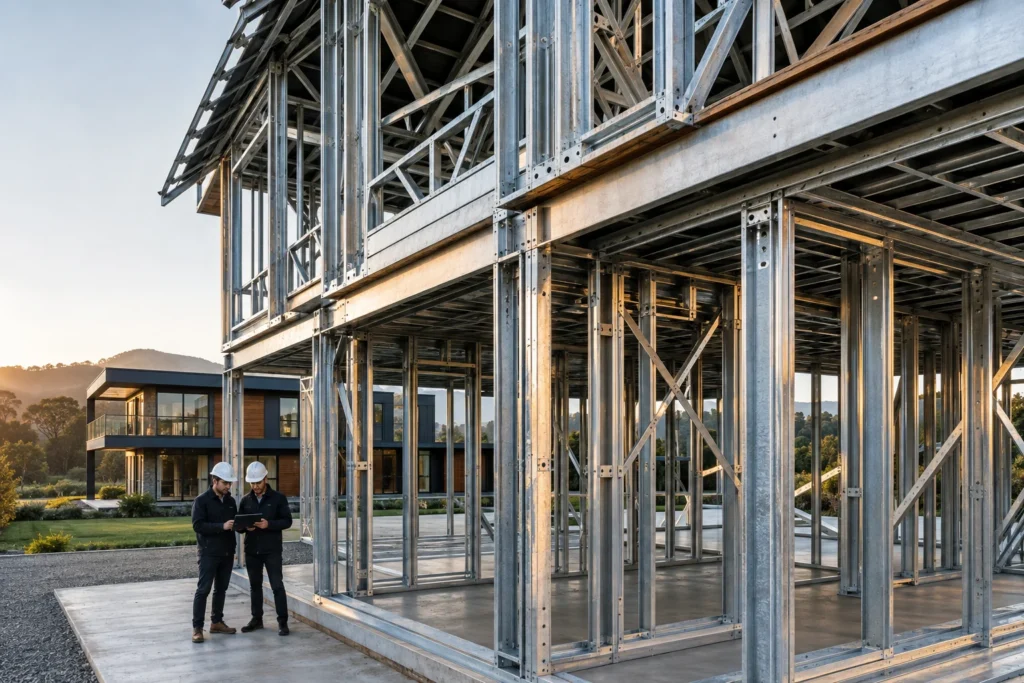
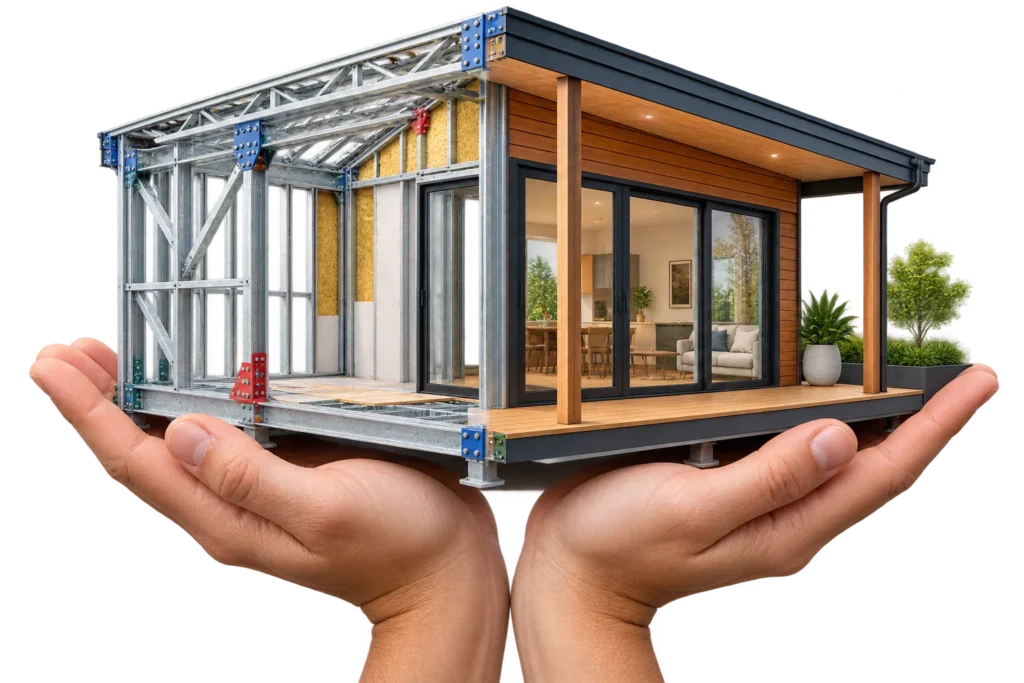
LGSF uses thin, galvanised cold-formed steel sections to build wall panels, floor joists and roof trusses. The members are produced to an engineered layout and assembled with screws or bolts. The frame is then closed with boards, insulation, cladding and linings. Read more about LGSF structures by ORZA, or see the general principles of cold-formed steel.
LGSF vs RCC: 8 Key Differences
| Factor | LGSF | RCC |
|---|---|---|
| Structural weight | Light; lower load on foundations | Heavy; larger foundations |
| Construction type | Dry assembly with screws and bolts | Wet work: casting and curing |
| Site and off-site work | Can run in parallel | Mostly sequential on site |
| Precision | High; produced from engineered layouts | Depends on site workmanship |
| Thermal comfort | Depends on insulation and envelope design | High thermal mass; depends on walls and roof |
| Modification and relocation | Easier to extend; selected designs can be relocated | Changes usually mean demolition |
| Familiarity and labour | Needs trained installers | Widely available labour and contractors |
| Best suited to | Cottages, villas, offices, classrooms, extensions | High-rise, heavy loads, basements |
1. Weight and foundations
A light gauge steel frame weighs far less than an RCC frame. Lighter structures need smaller foundations, which helps on poor soils, slopes and rooftops. This is why LGSF is often chosen for vertical extensions, subject to a structural check of the existing building.
2. Wet vs dry construction
RCC depends on concrete pours, formwork and curing, which are affected by weather and require water and time on site. LGSF construction is largely dry, so less water is needed on site and work is less disrupted by curing periods.
3. Timeline and parallel progress
With LGSF, foundations can be prepared on site while frame sections are produced, so the two activities happen together. RCC work generally proceeds floor by floor in sequence. The actual schedule for either method depends on size, design, approvals and site conditions, so always ask for a project-specific programme.
4. Precision and quality control
LGSF members are produced from coordinated structural information, so openings and service routes are planned in advance. RCC quality depends more heavily on formwork accuracy, concrete mix and curing on site.
5. Thermal and acoustic comfort
RCC and masonry have high thermal mass, which can help moderate temperature swings. LGSF buildings rely on a well-designed envelope: insulation, vapour control, cladding and roof build-up. Designed properly for the local climate, an LGSF building can be very comfortable; designed poorly, it can feel hot or noisy. This is why ORZA treats the frame and envelope as one system.
6. Flexibility, extension and relocation
LGSF buildings can be extended by adding framed bays, and selected designs can be planned for dismantling and relocation. RCC buildings are permanent; altering them usually involves breaking and rebuilding.
7. Labour and familiarity
RCC contractors and labour are available almost everywhere in India. LGSF needs trained installers and coordinated engineering. Working with an experienced design-and-build partner reduces this risk.
8. Durability and maintenance
Both methods can be durable when designed and detailed correctly. For LGSF, galvanised sections, moisture control and good flashings matter. For RCC, concrete quality, cover to reinforcement and waterproofing matter. Regular maintenance is needed for any building.
When LGSF Is the Better Choice
- Resort cottages, villas and farmhouses on remote or sensitive sites
- Rooftop rooms and vertical extensions, after structural assessment
- Offices, classrooms, clinics and staff housing that may need to expand
- Projects that benefit from repeatable units and a cleaner site
- Buildings that may need to be relocated in future
Explore how we use LGSF in prefab resort cottages and modular homes.
When RCC Is the Better Choice
- High-rise buildings and very heavy loads
- Basements and retaining structures
- Sites where approvals or lenders strongly prefer conventional construction
- Projects where local RCC labour is plentiful and timelines are relaxed
Many projects use both: an RCC plinth or podium with an LGSF superstructure above. This hybrid approach can combine the strengths of each method.
LGSF vs RCC Cost: What to Compare
Comparing LGSF vs RCC cost only on the frame can mislead. Compare the complete building: foundations, walls, insulation, roof, openings, services, finishes, site overheads and time on site. A lighter structure may save on foundations; a faster programme may reduce site costs; a better envelope may reduce cooling needs. Our guide to prefab house cost in India explains the full list of cost factors.
How ORZA Helps You Decide
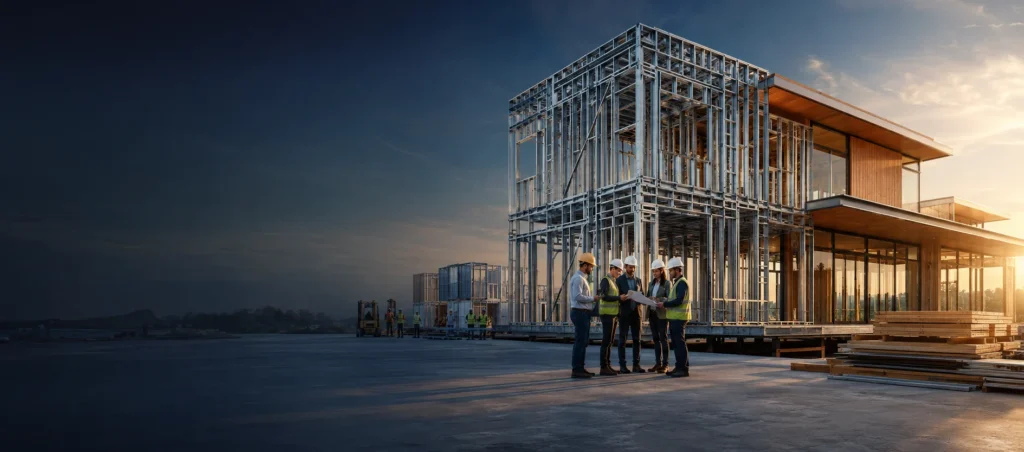
ORZA Infra does not push one method for every project. We review your site, use, climate, budget direction and timeline, then recommend LGSF, RCC, steel or a hybrid. When LGSF is right, we design the frame and envelope together so the building performs well for years.
Comparing LGSF vs RCC for your project? Share your plans with ORZA Infra and get an honest recommendation. Contact us or call +91 99267 76000.
Frequently Asked Questions
Is LGSF stronger than RCC?
They work differently. RCC is heavy and stiff; LGSF has a high strength-to-weight ratio. Both can be engineered to meet structural requirements for suitable building types.
Is LGSF suitable for Indian weather?
Yes, when the envelope is designed for the local climate with suitable insulation, moisture control, roofing and cladding. The frame alone does not decide comfort.
Is LGSF cheaper than RCC?
It depends on the full scope. Compare foundations, envelope, services, finishes, site overheads and time on site, not just the frame.
Can LGSF be used for multi-storey buildings?
LGSF is commonly used for low- to mid-rise buildings. Taller or heavily loaded buildings usually need RCC or hot-rolled steel, sometimes in a hybrid with LGSF.
Can I add an LGSF floor on my existing RCC house?
Often yes, because LGSF is light, but only after a structural engineer assesses the existing building and local approvals are obtained.